Co-teaching Accessibility: A Usability Testing Case Study
contributions.Curriculum and session design
Co-teaching partnership with OT
Lesson plan development
Usability test scaffolding
Session facilitation and iteration
overview.Advanced UX/UI students at Madison College tested interactive museum app prototypes with Occupational Therapy Assistant (OTA) students that acted as proxies for users with disabilities. This gave UX/UI students direct insight into how their design decisions might play out for real users.
Problem.Design students learning accessibility tend to focus on WCAG AA color contrast. It's concrete and easily checked, but it misses the full range of how people experience interfaces: motor limitations, attention differences, vision limitations beyond contrast, and the cognitive load of unfamiliar interactions.
Students also need support for their first solo usability test. Without structure, students struggle with facilitation, limiting the usefulness of their results.
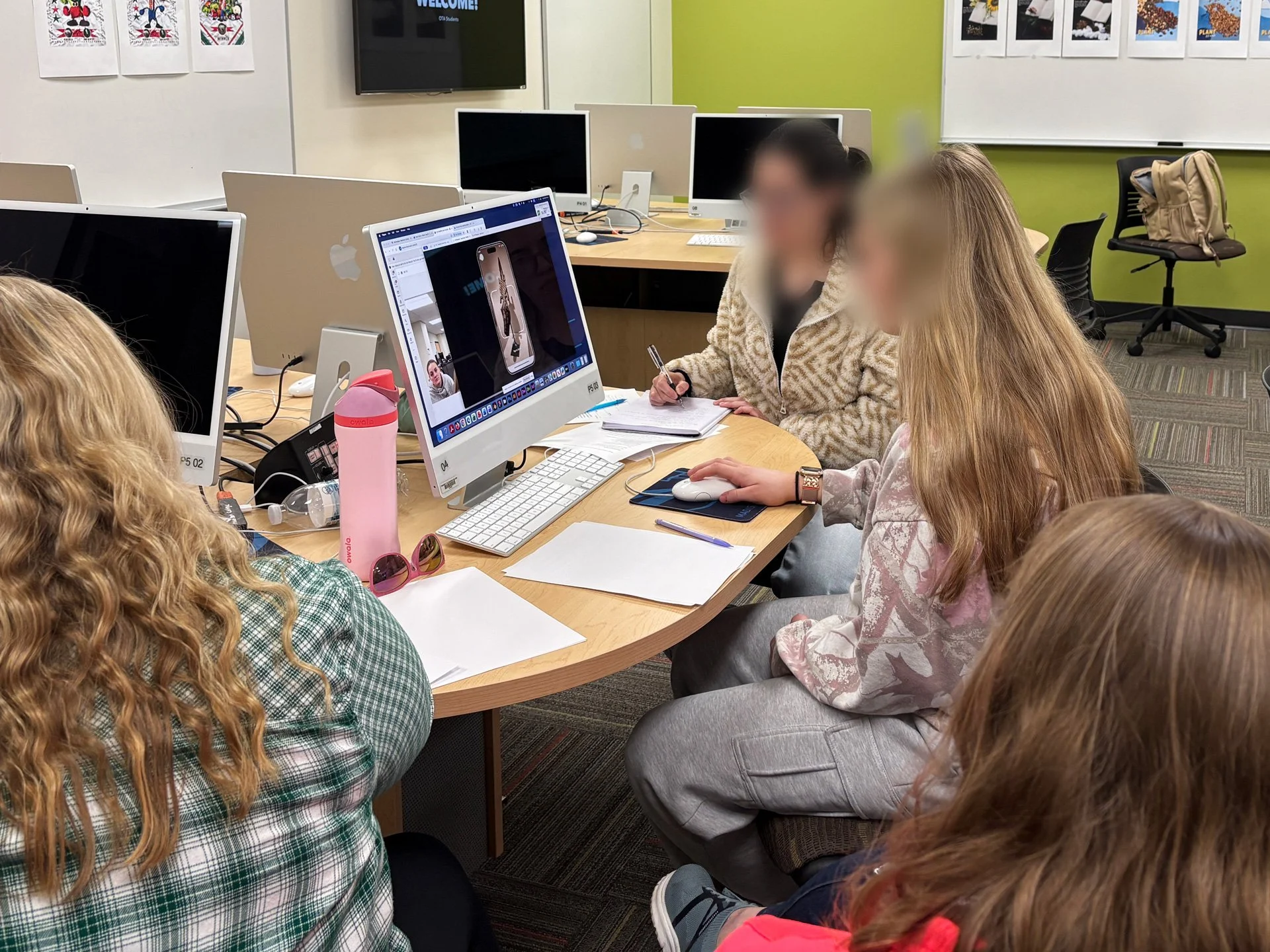
solution.A co-teaching partnership with OTA created a session where both student groups could learn from each other. During the usability tests, OTA students role-played users with specific accessibility challenges. UX/UI students practiced facilitating three usability test before summarizing and applying their findings.
Using OT students as proxies was a deliberate first step. They bring clinical knowledge of disability and functional limitations, but they are not disabled users. The intent is to build on this foundation and eventually test with users with disabilities directly to broaden our student’s understanding accessibility.
Session design.The session ran 90 minutes using a 1:3 ratio of UX/UI to OT students. There were three rounds of testing per UX student, each round using the same accessibility challenge across all students and groups so it would be easier to compare and contrast experiences.
Accessibility challenges.
Mouse speed slowed on devices.
OTA students role-played reduced dexterity.
Low motor function
low vision
OTA students wore special glasses that simulate areas of low or blurry vision caused by medical issues, such as stroke.
ADHD
OTA students role-played limited focus, including over-clicking, over-scrolling, and limited reading.
UX/UI student preparation & analysis.Students came into this course with limited understanding of what usability testing was or how it could be used. In order to help them understand the experience, I facilitated a usability test of the Madison College Library website, using the students as my testers. They were able to see the facilitation strategies in action and experience what it is like to be a tester.
When it was time to test their own projects, they used a FigJam template: a test plan built before class (intro script, task scenarios, follow-up questions) and a minimal note-taking frame for the session itself. Each test was recorded so that they could focus on facilitating, instead of note-taking.
After testing, students used the recordings and notes to identify themes, explored possible design responses, and prioritized their changes by effort and impact.
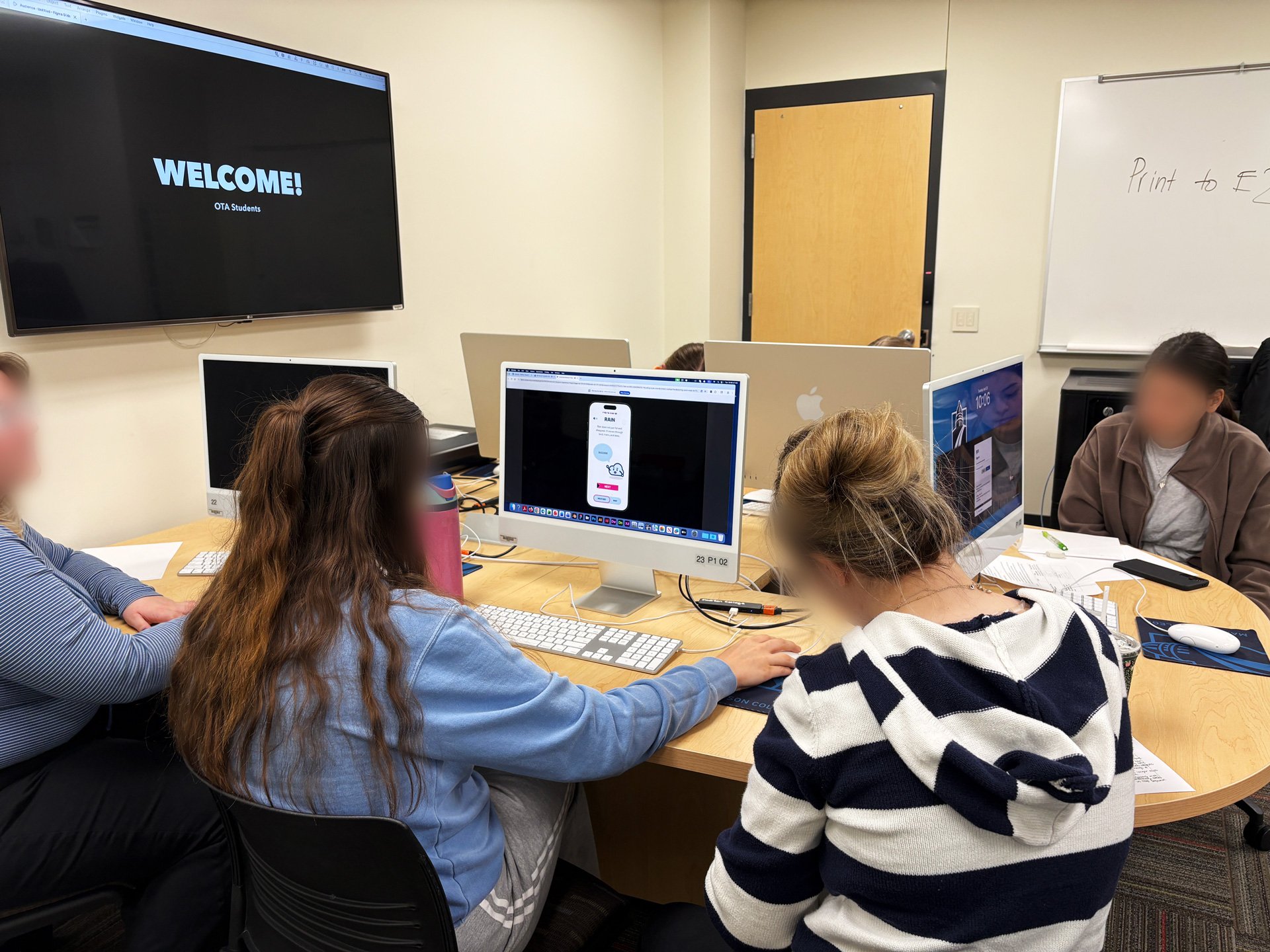
outcomes.Students reported that structured support made them more confident running their first test. Seeing OTA students use their prototypes gave them actionable data, and most applied findings before the end of the semester.
Areas that still need work:
Timing: the session ran too late in the semester, leaving little time for UX/UI students to apply findings meaningfully.
Hybrid logistics: managing in-person and virtual students simultaneously degraded the experience. The station setup needs rethinking.
Practice reps: students needed at least one low-stakes test before this session.
Two students reported missing their exit on the way to school the day of the test due to nerves!
Changes for the next iteration.Move earlier in the semester.
Add a low-stakes peer test before the main session.
Redesign the station setup for hybrid, or require in-person for this class day.
Work toward testing with users with disabilities directly. Proxy testing was only a starting point.